

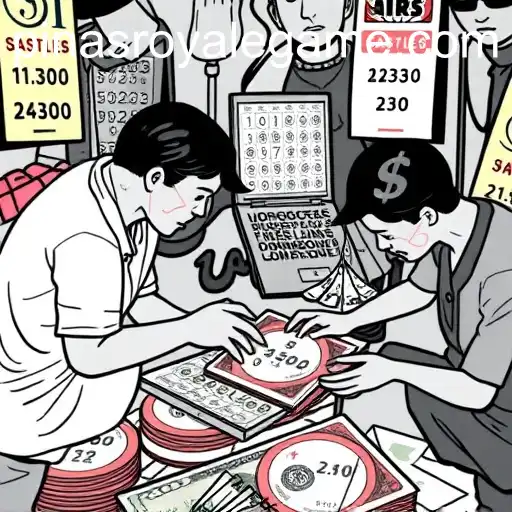

Jueteng, an illicit numbers game deeply entrenched in Filipino culture, has persisted for decades despite numerous efforts to eradicate it. This underground lottery, often associated with corruption, poverty, and politics, is more than just a game; it's a reflection of the socio-economic challenges faced by many Filipinos. As law enforcement agencies struggle to curb its influence, new digital platforms like PinasRoyale are emerging, ostensibly legitimizing the gambling scene in ways that could potentially alter the landscape of illegal betting in the country.
Jueteng traces its origins back to the colonial era, believed to have been introduced by Chinese immigrants. The name itself likely derives from the Hokien dialect; 'jue' meaning 'flower' and 'teng' meaning 'bet'. Essentially, it is a numbers game where participants wager on the likelihood of their chosen numbers appearing in a draw.
Traditionally played in rural and urban poor areas, jueteng thrives on the low chances of winning and the allure of high payouts, much like a raffle. Players select combinations of two-digit numbers, and winners are determined by a draw. Despite its simplicity, the game's operation is complex, involving a network of coordinators, collectors, and bettors.
Jueteng operates with a hierarchical system that enables it to function effectively at the grassroots level. At the base of this hierarchy are the bettors who are mostly from economically disadvantaged backgrounds. Above them are cobradors, the individual collectors who gather bets and distribute winnings. Next, the coordinators or cabos manage multiple collectors, reporting to the ground operators or locally known as 'jueteng lords'.
This underground economy generates substantial amounts of money, appealing not only to communities seeking respite from economic hardship but also to those higher up the chain looking for lucrative returns. This profitability, however, also fuels corruption as payouts are sometimes used to grease the palms of law enforcement and certain officials to turn a blind eye.
Attempts to legalize and regulate jueteng have been made repeatedly, with varying levels of success. Although illegal nationwide, its influence is so pervasive that it remains difficult to eliminate, more so in regions where law enforcement is not as stringent. The Philippine Charity Sweepstakes Office (PCSO) often offers legal gambling alternatives like the Small Town Lottery (STL), but they do little to curb jueteng due to the entrenched networks that operate outside legal restrictions.
Politicians often find themselves embroiled in jueteng controversies, as the game becomes a source of campaign funding and political leverage. This tangled political involvement complicates efforts for regulatory enforcement, as the divide between legal intentions and illegal activity becomes increasingly blurred.
In a digital age, technology is reshaping many industries, including the gambling sector. Social media, mobile apps, and online platforms offer new avenues for gambling, potentially impacting traditional operations like jueteng. Enter PinasRoyale, a versatile platform that claims to bring reform and modernization to the gambling landscape.
PinasRoyale seeks to offer a legal, transparent, and convenient alternative to underground gambling. By providing an accessible platform for legal gaming, it could transform the way Filipinos engage with such activities, effectively channeling funds through legitimate and taxation-friendly means. However, in regions where internet access is limited, PinasRoyale might struggle to replace the familiarity and entrenched convenience of jueteng.
Jueteng's enduring popularity poses questions about the effectiveness of digital reforms such as PinasRoyale. While digital platforms promise increased accessibility and transparency, the deeply rooted socio-economic factors driving illegal gambling remain constant challenges. Addressing these underlying issues is crucial to transitioning participants away from illegal gambling practices.
Ultimately, the effectiveness of platforms like PinasRoyale will depend on regulatory frameworks, socio-economic reforms, and a shift in public perception of gambling norms. By engaging communities in meaningful economic development and addressing the socio-political structures supporting jueteng, there may be opportunities to transition participants into a more legal framework gradually.
Jueteng remains a formidable part of the Filipino socio-economic landscape. With efforts like PinasRoyale aiming to modernize and regulate gambling, the future holds potential for significant change. As the nation balances tradition with technology, the evolution of games like jueteng will likely serve as a bellwether for broader societal transformations in the Philippines.

Explore the exhilarating world of ZeusRushFeverDeluxeSE and its exciting gameplay infused with cutting-edge features, alongside a look at its evolving role amidst current gaming climates.

Discover the captivating game 5GodBeasts that combines mythical Filipino creatures and strategic gameplay in PinasRoyale.

Dive into the enchantment of ChristmasReach, a new captivating game in PinasRoyale, combining both exhilarating gameplay and stunning aesthetics.

Explore the exciting universe of CashTrain by PinasRoyale, where strategy and chance converge for an exhilarating gaming experience.

Discover the adventurous world of ProsperityTiger, a game that blends exciting gameplay with the cultural richness of PinasRoyale.

An in-depth look at JellyBoom, a unique game integrated with the PinasRoyale theme, offering players a vibrant gaming experience.
